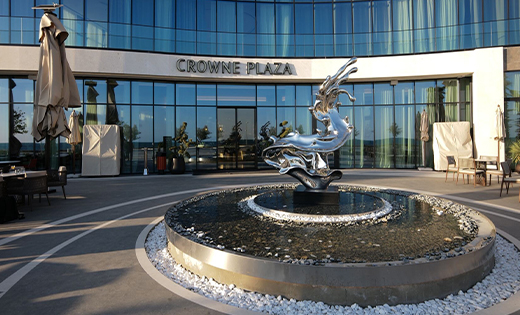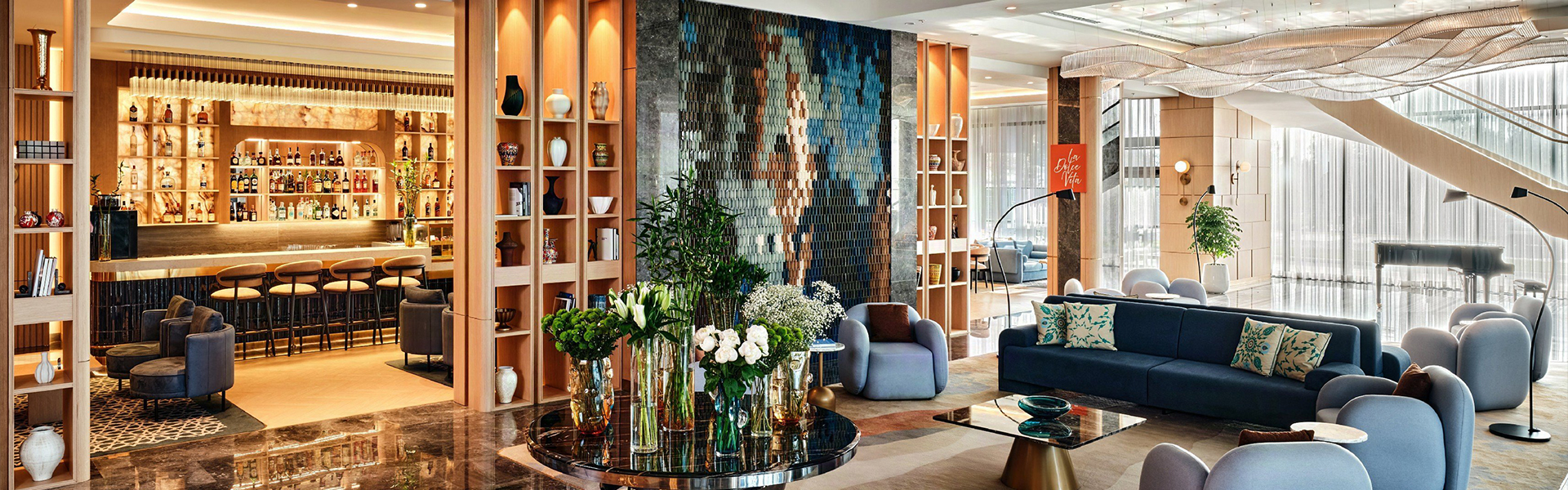

Located in the heart of Central Asia, Tajikistan is known for the majestic Pamir Plateau, dramatic mountain ranges, and a rich cultural heritage shaped by its unique geography. For the Crowne Plaza Hotel in Dushanbe, Silian Art and Design draws from this distinctive sense of place, translating the forms of the mountains, the changing qualities of natural light, and the visual language of local traditions into a contemporary artistic expression. The project encompasses the full scope of art consultancy, artwork design, bespoke production, and on-site implementation.
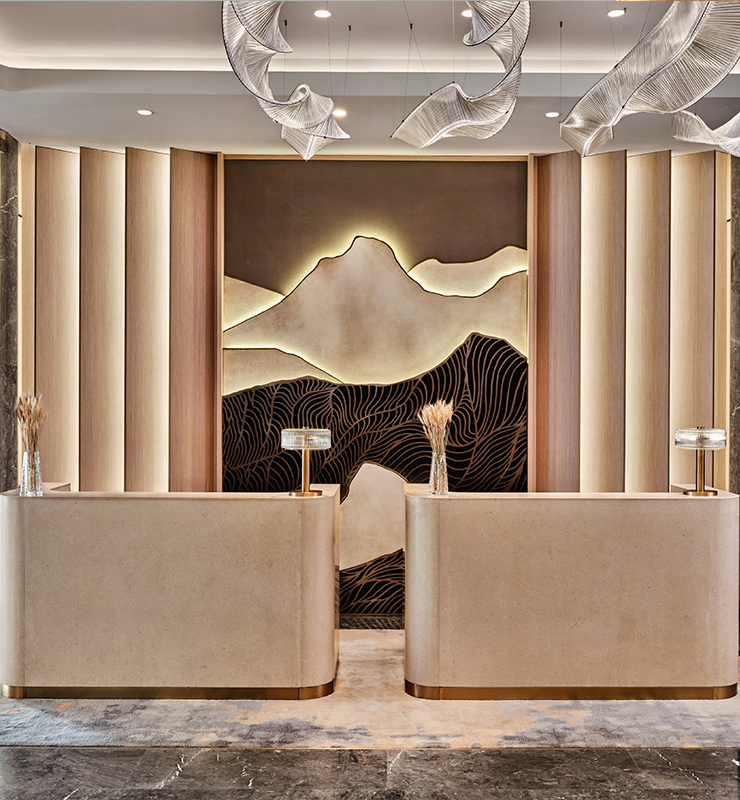
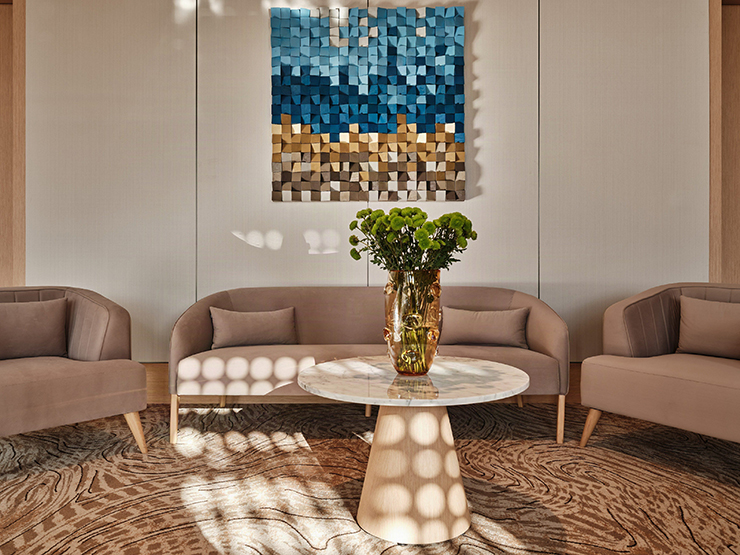
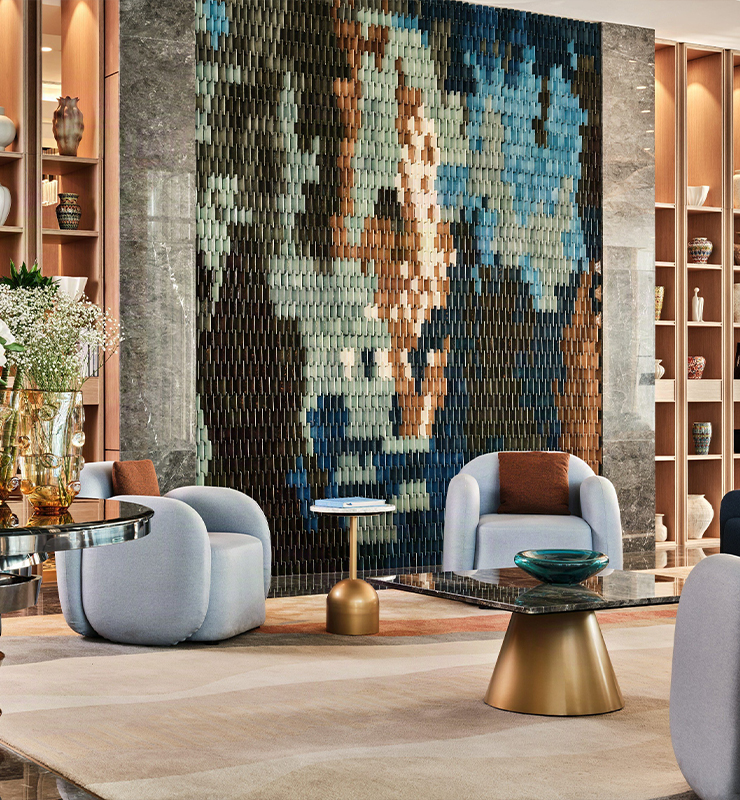
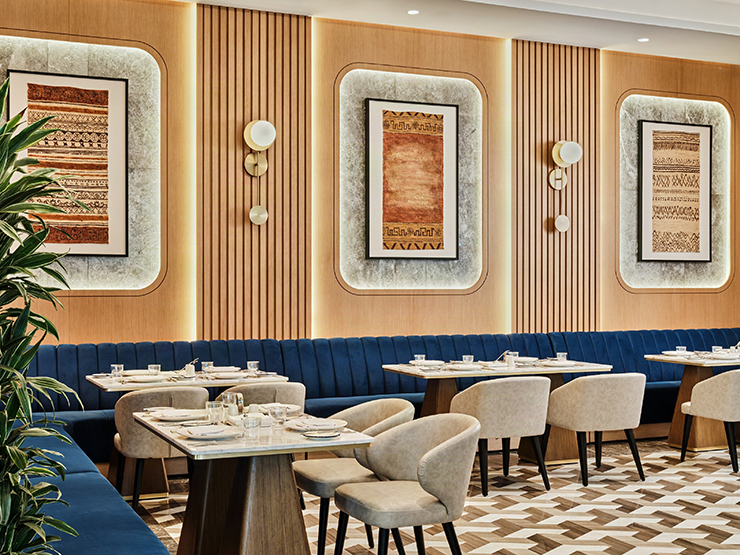
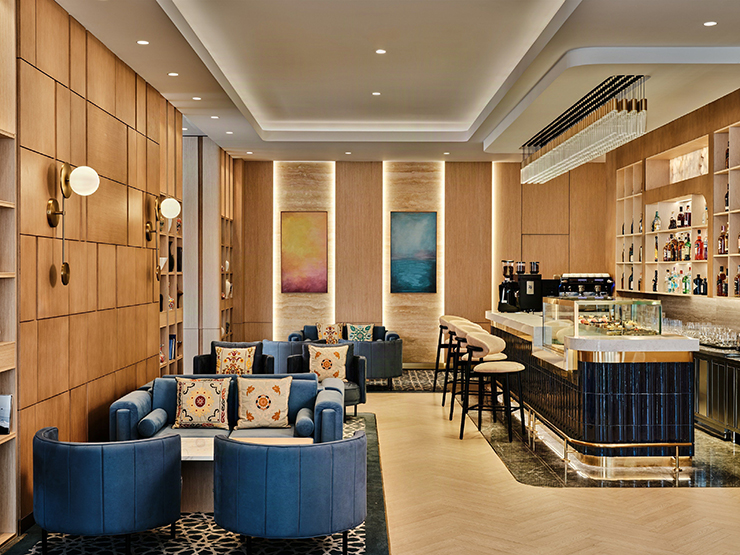
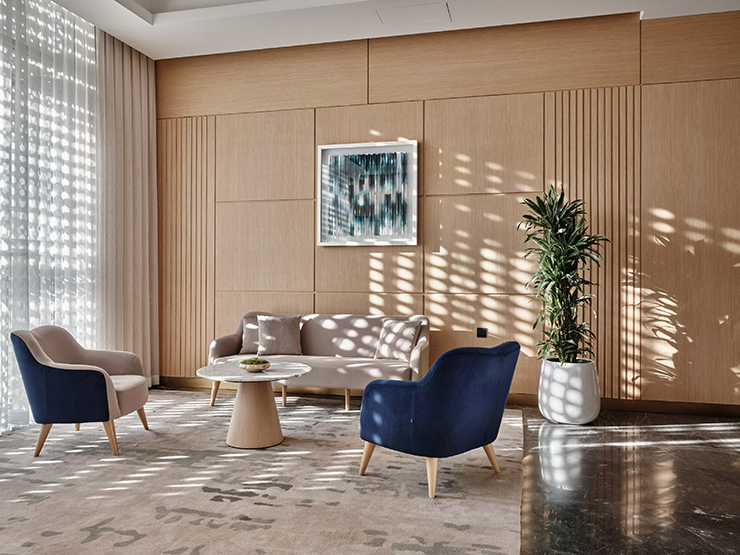
The artistic direction begins with the landscape itself. The warm, earthy palette throughout the interiors reflects the tones of the land and mountains, while muted blues and soft neutrals evoke distant snow peaks and mist-covered valleys. Rather than reproducing the landscape literally, these colors and forms are abstracted and woven into the interior, creating a subtle connection between the hotel and its surroundings.
This relationship between nature and space is further expressed through light and shadow. At the junctions between corridors, gradient walls and carefully positioned lighting create atmospheric passages that connect different areas of the hotel. Illumination rises gently from lower levels of the walls, creating a gradual transition between light and shadow, reminiscent of moonlight moving through a mountain valley. These moments transform circulation spaces into quieter visual experiences, allowing the journey through the hotel to unfold as part of the overall artistic narrative.
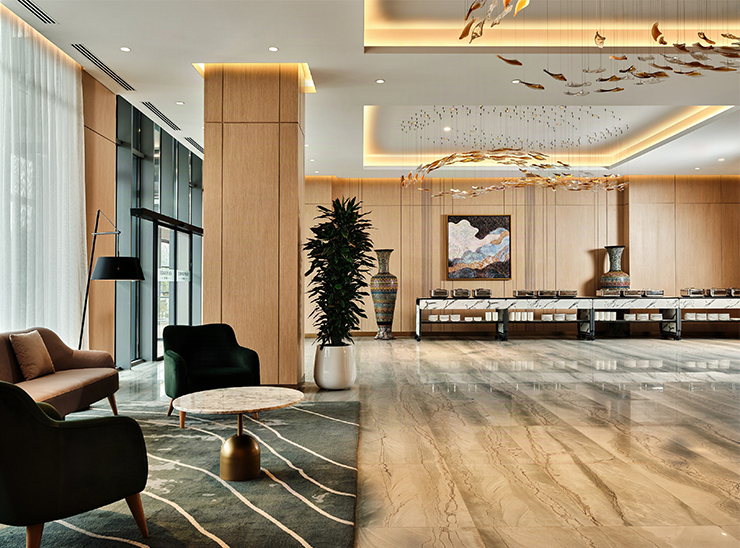
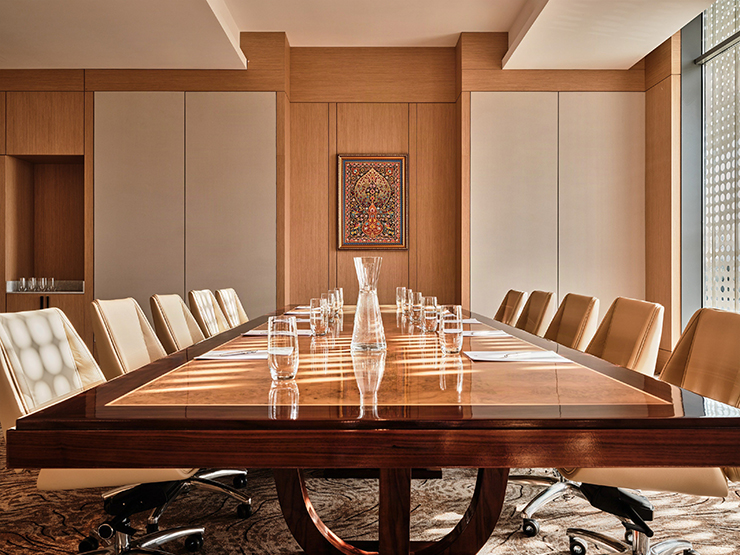
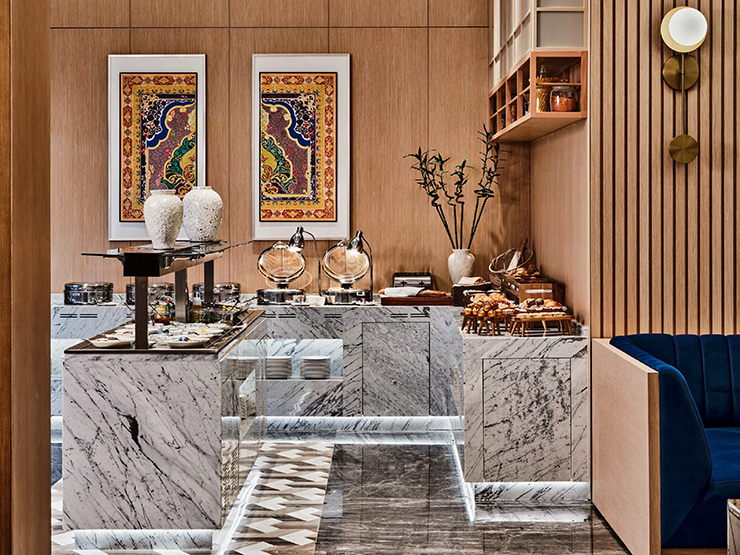
Regional culture is woven into the project in a similarly understated way. In the meeting spaces, textile-inspired wall artworks draw from the lines, rhythms, and motifs of traditional Suzani embroidery. Rather than directly reproducing its decorative patterns, the design extracts their essential visual characteristics and reinterprets them through contemporary composition and materials. Traditional craftsmanship therefore becomes a source of artistic inspiration rather than a literal decorative reference.
The guest rooms continue this restrained approach. Artwork in muted blue, ivory, and neutral tones introduces gentle blocks of color and form, echoing the atmosphere of distant mountains disappearing into the mist. Integrated with the materials, furniture, and lighting of the rooms, these works add visual depth without overwhelming the sense of calm and comfort expected of a hospitality environment.
Across the hotel, art is conceived not as a collection of isolated decorative pieces, but as a continuous visual language. Mountain contours, earthy tones, shifting light, textile textures, and traditional motifs are connected through a contemporary interpretation of the region. Each element contributes to a sense of place while maintaining a refined and cohesive aesthetic.
From the natural contours of the Pamir Mountains to the intricate rhythms of Suzani embroidery, the project establishes a dialogue between landscape, heritage, and contemporary life. Instead of relying on overt regional symbols, cultural memory is subtly embedded within color, material, light, and artistic form—allowing the character of Tajikistan to emerge gradually throughout the hotel.
Here, art becomes more than decoration. It becomes a way of experiencing the landscape and culture of Dushanbe, offering guests a quiet encounter with the spirit of the Pamirs through contemporary art and design.